



Giant Rubber Tree
- Regular price
-
$2,150.00 - Regular price
-
- Sale price
-
$2,150.00


All planters are the correct size fit for your plant & will be set up for optimal plant growth.
Couldn't load pickup availability
Check Delivery Options (By Zipcode)

Product Details
Product Details
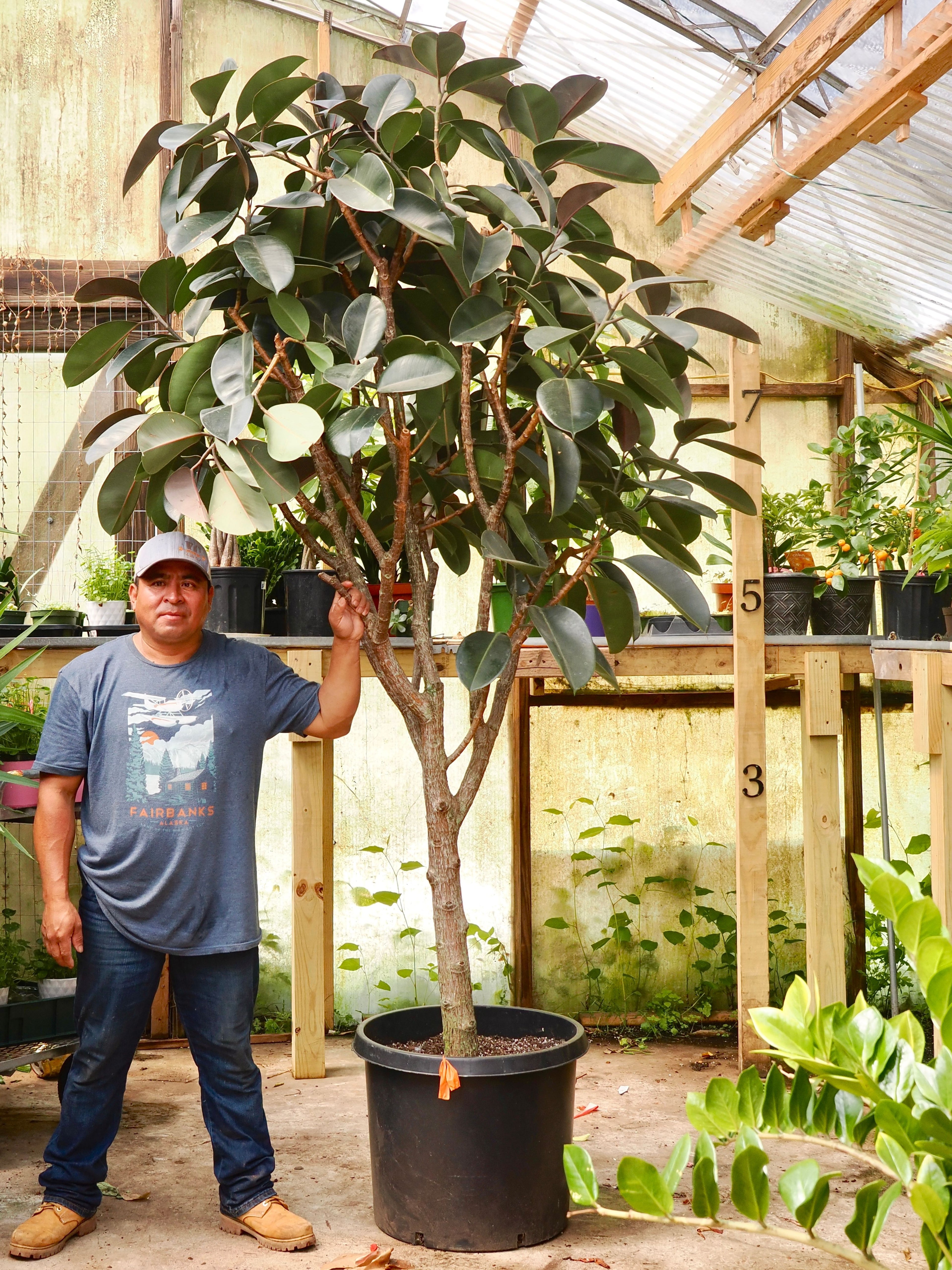
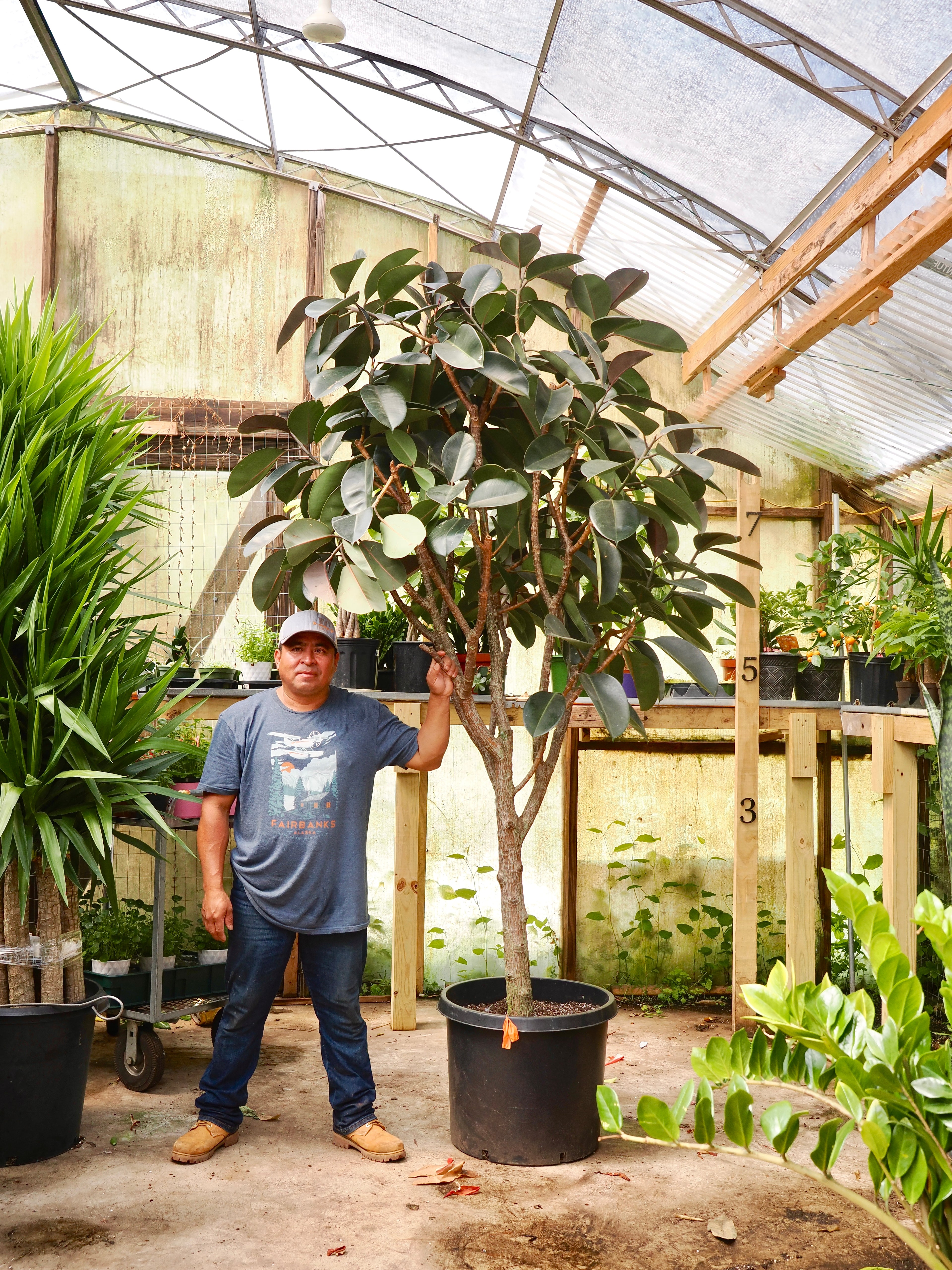
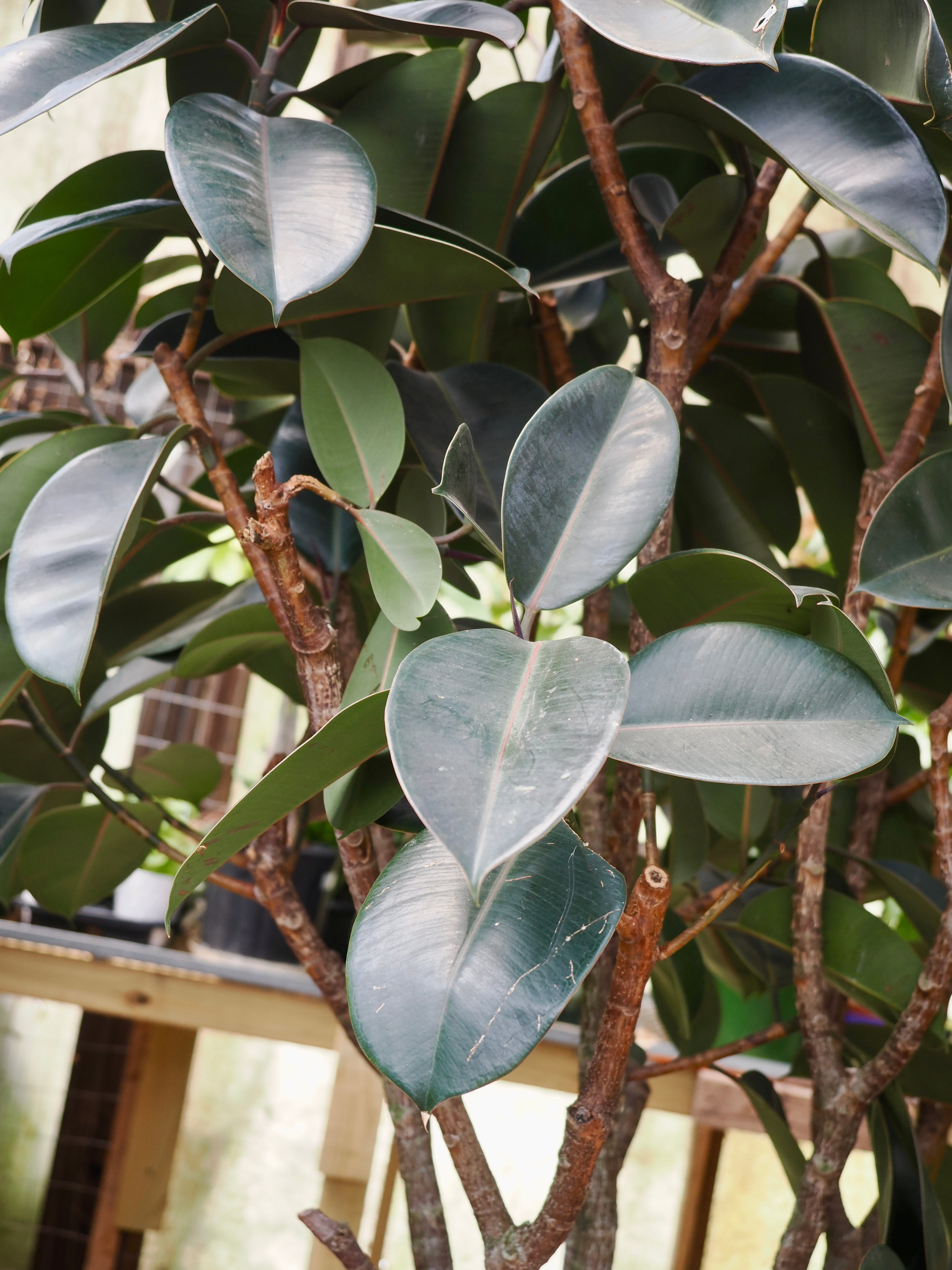
You want to make a statement, this Giant Rubber Tree will bring the drama you need. Broad, glossy paddles as thick as leather, so deeply green they look wet, each one big enough to fill your hand. Lift that canopy up a real woody trunk to head height, and what you have is an actual tree growing in your living room. People stop in the doorway when they see it.
That trunk is what sets a giant apart, woody and self-supporting, the mark of a tree that has been growing for years rather than seasons. Also known as Ficus elastica, and native to the forests of South Asia, the rubber tree is famously long-lived, so one this size is a tree you keep for decades and hand on. It stands around 6 to 7 feet (about 1.8 to 2.1 m), and as the plain deep-green kind it is even more easygoing about light than its variegated cousins.
Care
How tall does a Giant Rubber Tree get?
A Giant Rubber Tree can climb to 6 to 10 feet (about 1.8 to 3 m) indoors over the years, and far higher in the wild. This one is already a mature tree at around 6 to 7 feet, with a proper trunk and full canopy. Should it ever stretch past where you want it, a trim to the top holds its height and pushes it to branch out fuller.
How much light does a Giant Rubber Tree need?
A Giant Rubber Tree does best in plenty of bright, indirect light near a window. As the deep-green type it copes with medium light more happily than the variegated kinds, though brighter conditions keep it fullest and strongest. Give it some gentle direct sun if you can, turn it now and then for even growth, and keep it clear of harsh midday glare.
How often should I water a Giant Rubber Tree?
Water your Giant Rubber Tree when the top inch or two (2.5 to 5 cm) of soil feels dry, soaking it through and letting it drain. It would much rather run a little dry than sit in wet soil, since soggy roots are its one real weakness. Cut back in winter when growth slows, and wipe the big leaves occasionally so they stay glossy and drink in the light.
Does a Giant Rubber Tree need feeding?
A Giant Rubber Tree takes a light, steady feed while it is actively growing. Offer a balanced liquid houseplant fertilizer at half strength about once a month through spring and summer, then let it rest over fall and winter. That gentle feeding keeps the canopy lush and the new leaves coming.
Are Giant Rubber Trees hard to care for?
A Giant Rubber Tree is one of the more forgiving big trees you can bring home. Keep it in good light, let the soil dry between waterings, and it mostly looks after itself. The older leaves low on the trunk drop away as the tree grows tall, which is simply a tree maturing rather than a sign of trouble.
Can I prune a Giant Rubber Tree?
A Giant Rubber Tree responds well to pruning whenever you want to shape it or hold its height. Cut just above a leaf node, and it will branch out below the cut and grow fuller, while the trimmed top can even be rooted into a new plant if you fancy it. The stems release a milky sap when cut, so wear gloves and keep it off your skin and floors.
Pet-friendly?
The Giant Rubber Tree is not pet-friendly. Its leaves and stems carry a milky sap that is toxic to cats and dogs and can irritate skin on contact, so it is best kept where they cannot get at it. If you live with pets who like to taste-test the greenery, our pet-friendly collection has plenty of large plants that are safe alongside them.
Is the Giant Rubber Tree safe for dogs?
The Giant Rubber Tree is not safe for dogs. If a dog chews the leaves or stems, the sap can cause drooling, mouth irritation, and an upset stomach, and it can bother the skin too. With a tree this size the lower leaves sit within easy reach, so it suits a home where your dog leaves plants alone.
Is the Giant Rubber Tree poisonous to cats?
The Giant Rubber Tree is toxic to cats. The same milky sap irritates their mouth and stomach if chewed, and can itch their skin when they groom, so the lower foliage is the part to keep out of a cat's way. We are happy to point you toward pet-safe statement trees if a cat shares your space.
Factoids
Why is it called a Rubber Tree?
The Rubber Tree is named for the milky latex inside its trunk and leaves, which was tapped and turned into natural rubber long before factories made it synthetically. You meet a tiny version of that sap every time you prune one, which is why gloves are wise. The tree's gift to industry is now mostly enjoyed as a handsome houseplant.
What is the difference between a rubber plant and a rubber tree?
A rubber plant and a rubber tree are the same plant, just two names for Ficus elastica. People tend to say "rubber plant" for a small one on a table and "rubber tree" for a tall, trunked specimen like this. Whichever name you use, you are talking about the same glossy-leaved beauty.
How long does a Rubber Tree live?
A Rubber Tree is a genuinely long-term companion, often living twenty to thirty years indoors and frequently longer with steady care. A giant one has already put in years of growing to reach this size. It is the sort of tree you grow alongside, watching it become a fixture of your home rather than a passing addition.
Buy a Giant Rubber Tree
A Giant Rubber Tree grown to this height carries a trunk and canopy shaped by years, so each one stands a little differently. The best way to choose yours is to see it. Book a free video shopping call and we will show you the tree live, turn it so you can take in the trunk and the full spread of the leaves, and help you pick the shape that suits your space. Book your call here. Then our own van and driver bring it to your door, trunk steady and leaves protected, because a tree this size deserves careful handling. Let's grow something beautiful - and big - together.
Title (50): Giant Rubber Tree (Ficus elastica) | Dahing Plants Meta (154): A mature Giant Rubber Tree with a real trunk and a canopy of thick, glossy deep-green leaves. Long-lived, delivered by our own van. See it on a free call.
Only At Dahing Plants
-

Hand delivered, never in a box.
Check delivery to your areaYour plant rides in our own van with our own driver, and we carry it straight to the spot you picked. It never sits in a shipping box or gets handed to a courier. Delivery speed depends on where you live, so you'll see your estimate at checkout.
-

Our own greenhouse, that's as fresh as it gets.
Book A CallThat local plant shop you've got bookmarked probably bought their plants from us. Order here and you skip the middleman, buying straight from the greenhouse where our team has looked after your plant since it arrived. You can even meet your exact plant on a free video call before you buy.
-

Exclusive HUGE size that only we carry
Shop Our Tallest PlantsMost shops stop around 5 or 6 feet and call that extra large. We grow and deliver trees and palms up to 10 feet. So when you say you want to make a statement, you get a real one, not someone else's idea of "big."


