

Outdoor Fireplace Design in New Jersey: What Actually Makes One Work
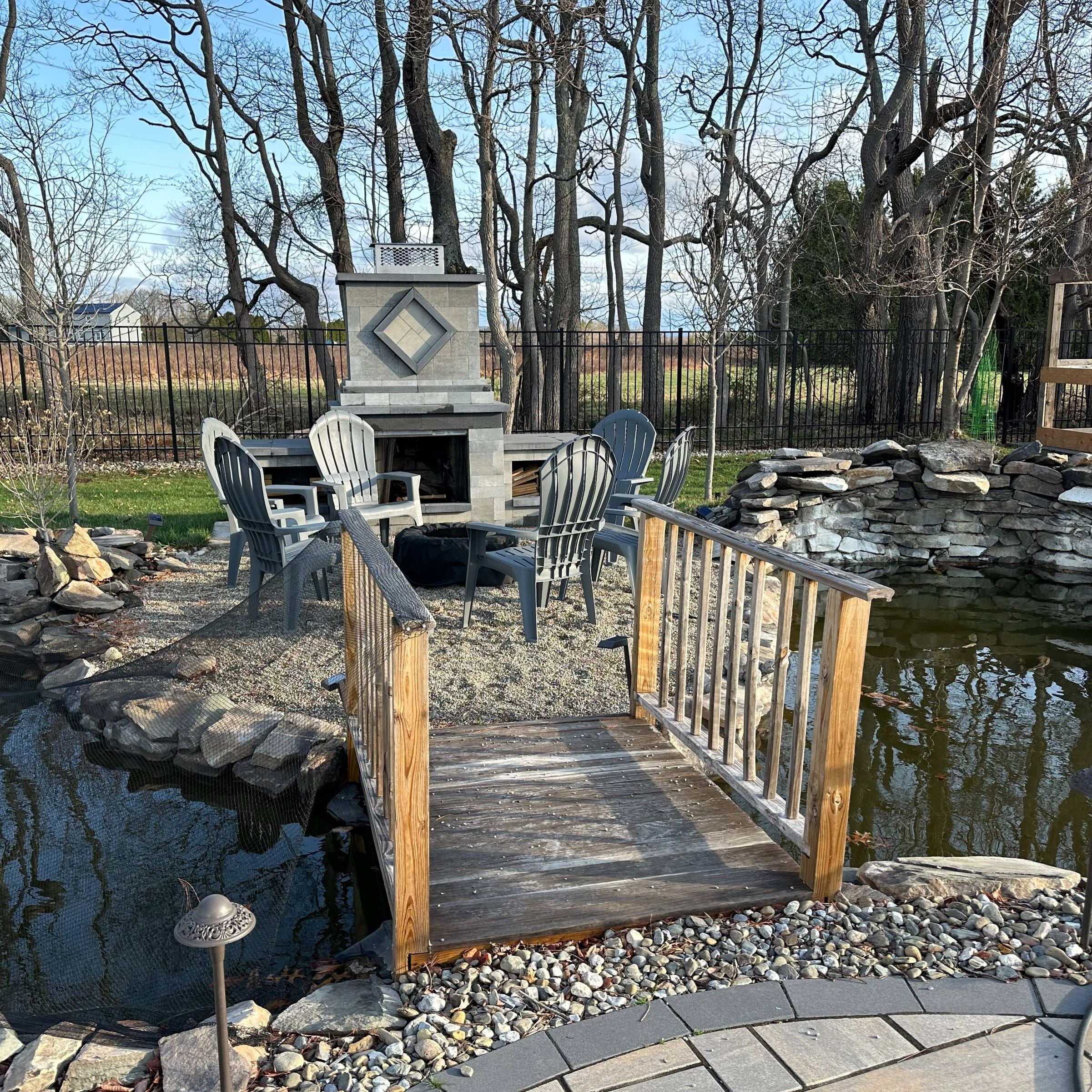
What Makes a Great Outdoor Fireplace Design in New Jersey?
Your friends are relaxing in the garden chairs, a fire is going, there’s something delicious to snack on in the middle of that table you thrifted. And as you walk back from the house with a chilled bottle of something to share, you give a contented sigh. This is the cool Fall evening you always imagined.
This is what you pictured before you pictured anything else about the outdoor fireplace design project, and it's a good place to start. But between that chic, wholesome picture and a finished fireplace, there are a handful of decisions that matter more than most homeowners realize.
Good outdoor fireplace design isn't really about style first. It's about getting a few practical choices right so the style holds up: where it sits, what it's built from, and whether a fireplace or a fire pit is actually the right tool for what you want your evenings out there to look like. Get those right, and the design part takes care of itself.
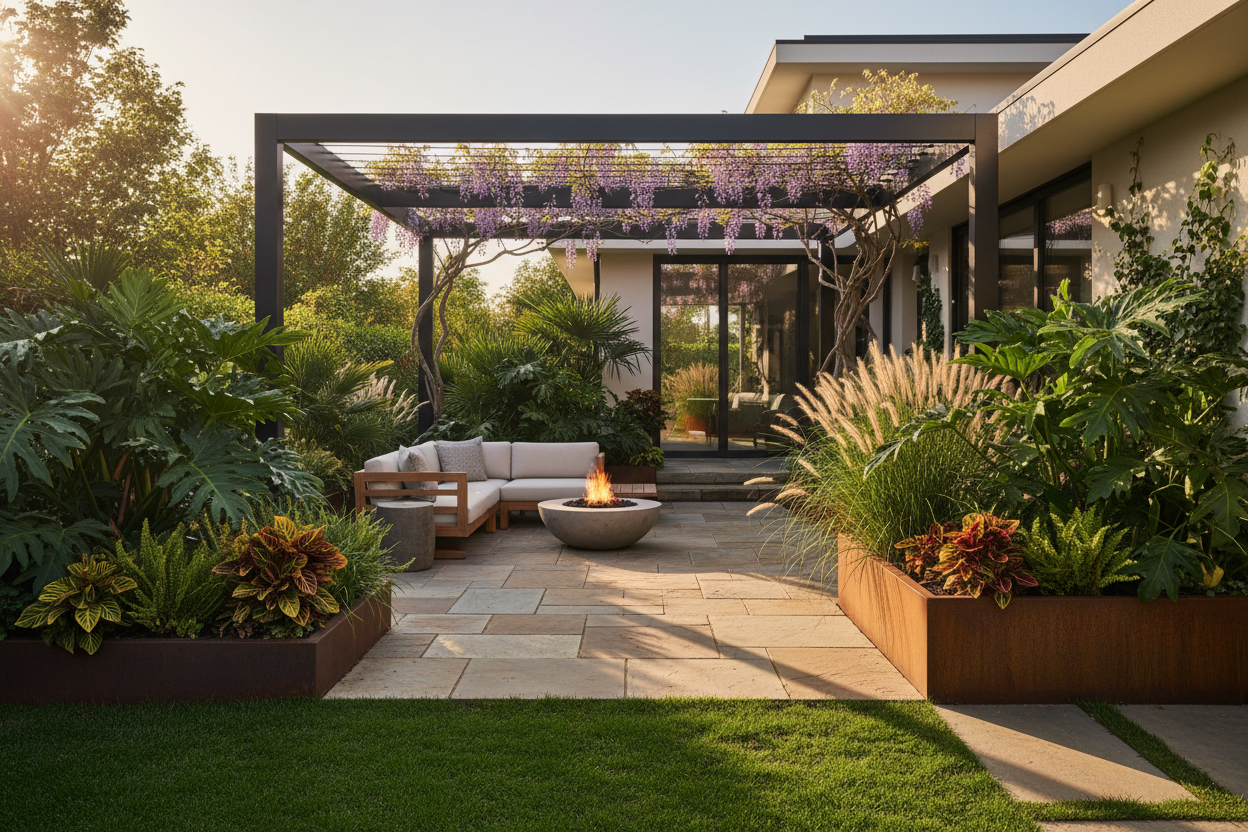
Fireplace or Fire Pit? How to Know Which One Fits Your Space
A fireplace and a fire pit solve different problems, even though people often talk about them in the same breath.
A fireplace gives you a defined, architectural focal point: a wall, a mantel line, something that anchors the space and makes it feel permanent. Because the fire sits inside a firebox rather than being surrounded by open seating, it throws less heat than a fire pit does. So you’ll need to bear that trade-off in mind. If the built-in look and a sense of permanence matter more to you than maximum warmth, a fireplace is the right call.
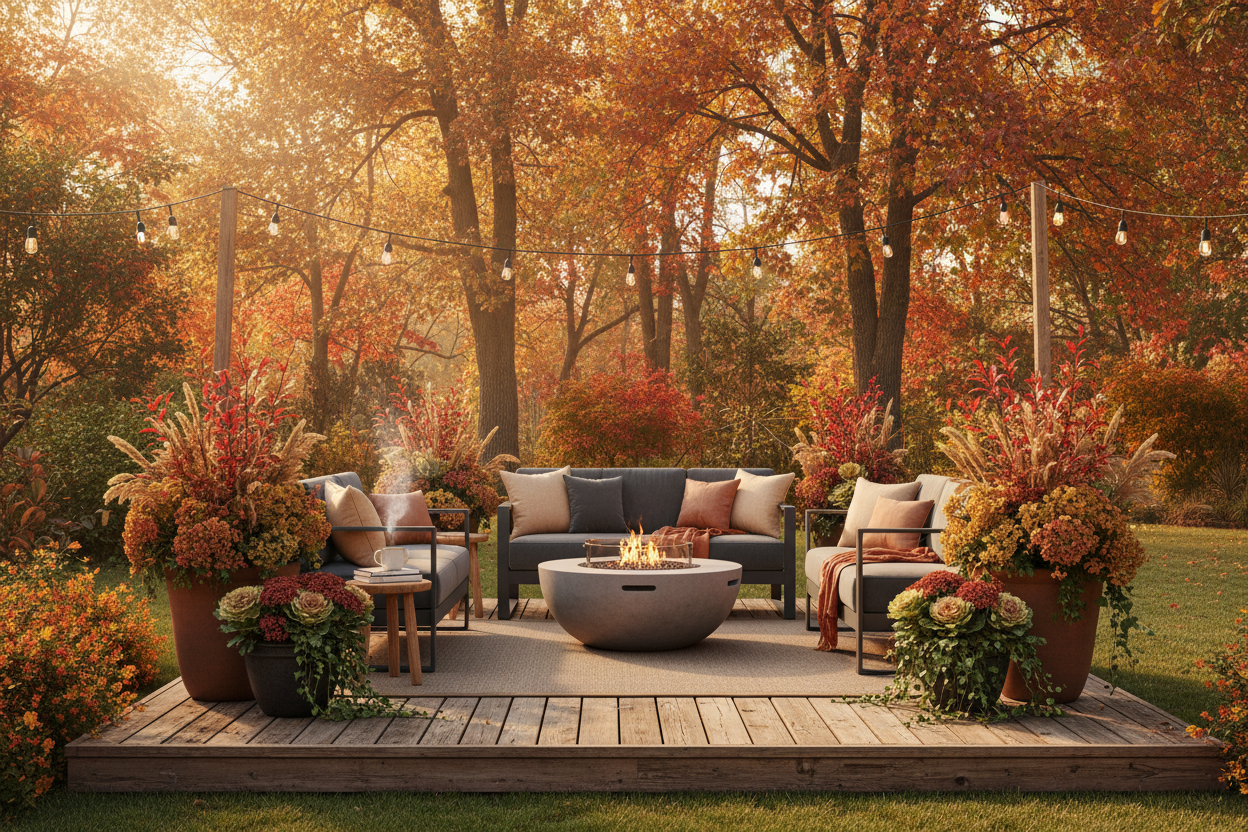
A fire pit or fire table does the opposite. Seating wraps around it, heat radiates in every direction, and it tends to suit spaces built around gathering. Custom fire pits and fire tables can be built in gas or wood-burning versions, in sizes that fit anything from a small courtyard to a large backyard.
Neither one is the "better" choice. The honest question is what you actually want your evenings out there to look like, and how much heat you need to make that happen.
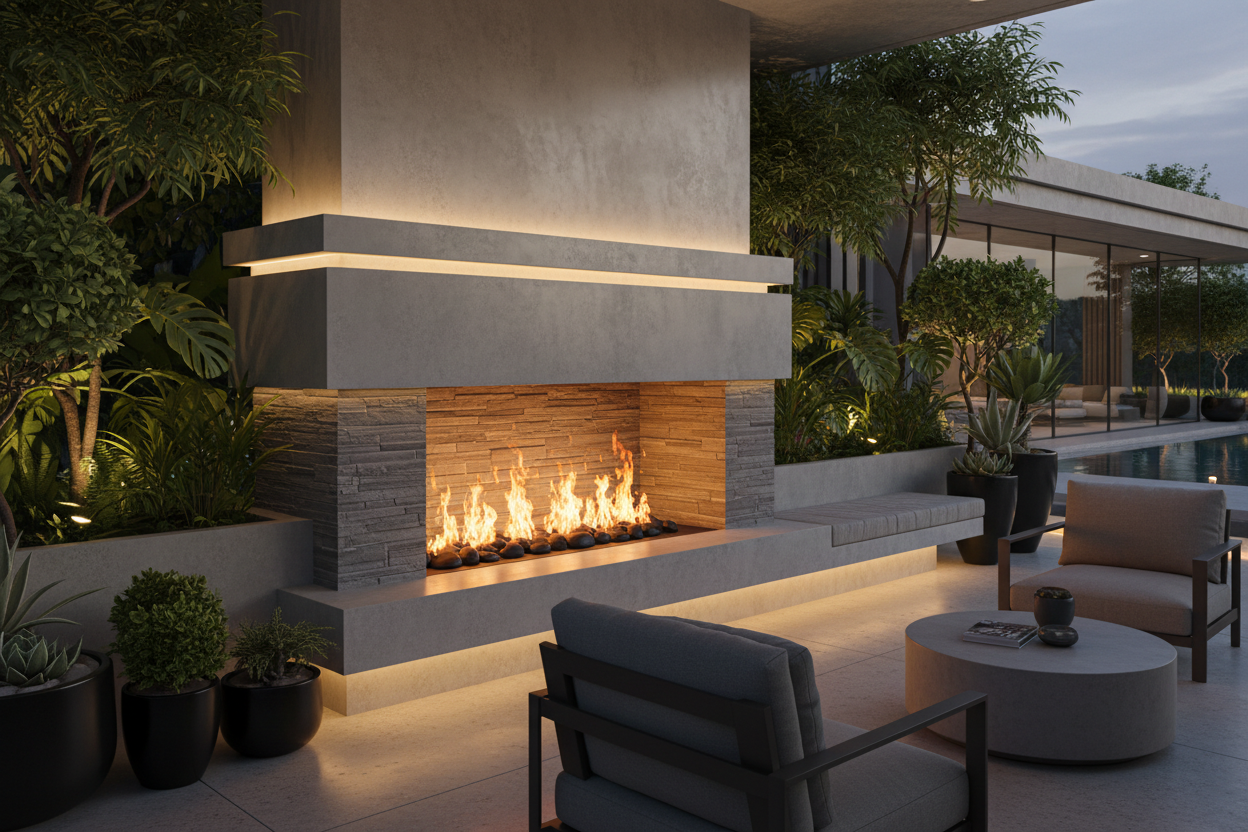
Why Placement Matters As Much As the Design
This is the part of the blog that will stop you sitting in a cloud of smoke all evening!
Outdoor fireplaces are far more affected by wind than indoor ones, because there's no controlled environment holding the draft steady. Homeowners who've placed a fireplace on the wrong side of a deck or patio often find that even a light, steady breeze carries smoke straight back into the seating area, every time. The fix comes from getting the orientation right before anything is built, based on how wind actually moves across your specific property.
In dense NYC, Long Island, and North Jersey lots, that's rarely straightforward. Wind behaves differently between buildings than it does in an open yard, and a courtyard that feels sheltered in summer can funnel wind unpredictably once the trees lose their leaves in fall, right when you'll actually be using the fireplace. Good outdoor fireplace design accounts for that before the first stone is set, not after.
(And it’s one of the many things our landscaping experts will discuss with you before anything kicks off!)
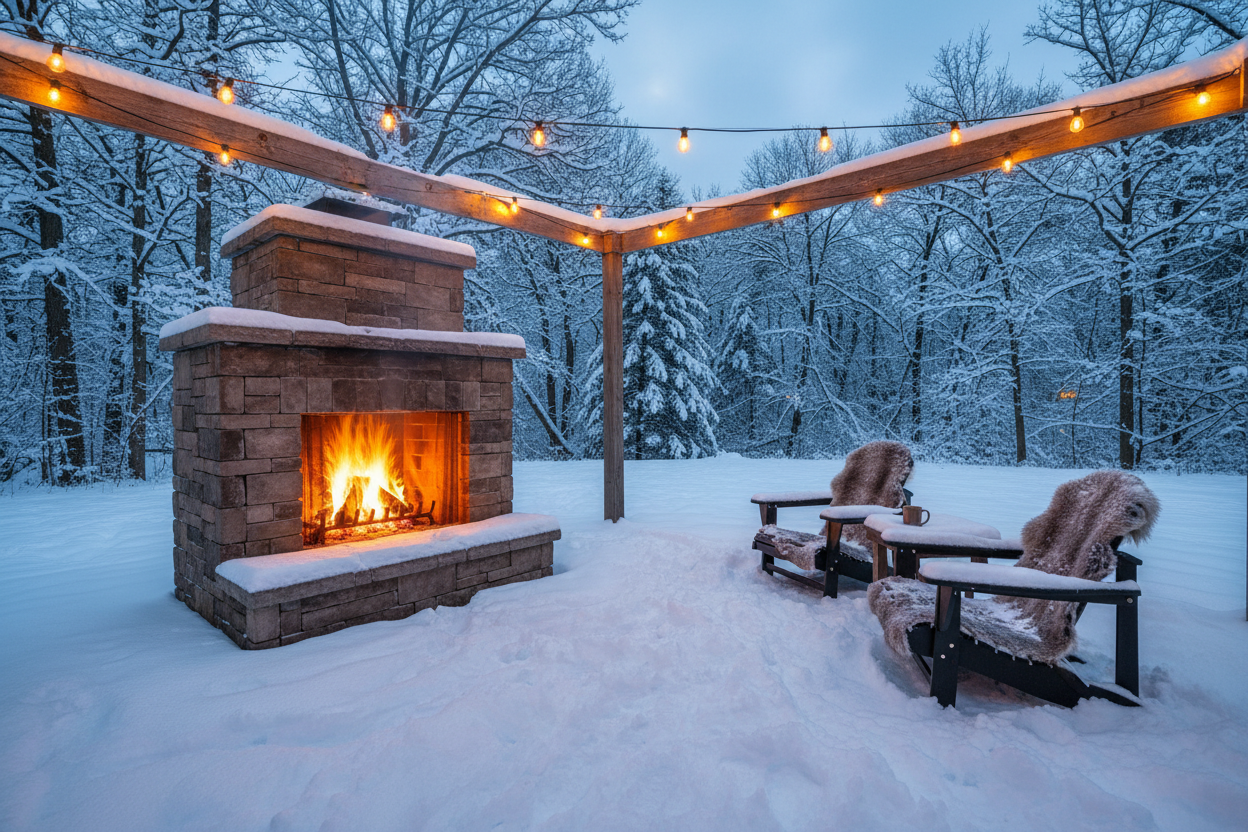
Built to Hold Up Through a New Jersey Winter
Outdoor fireplaces and pits can be made of a wide range of materials. You want something that’s going to look great AND won’t need repairs after two years.
Stone, granite, and wood finishes each bring a different look, and the right one depends on the rest of the property, not just personal taste. But every finish in this region has to survive the same conditions: freeze-thaw cycles that stress joints and mortar, road salt drifting into yards near the street, and summer heat reflecting off nearby brick and pavement. A finish chosen for a showroom photo without those conditions in mind will end up with a hairline crack two winters later.
This is also where you need to think about gas versus wood. Gas fireplaces are simpler to start and maintain, with fewer moving parts exposed to weather. Wood-burning fireplaces give you the smell, the sound, and the more traditional feel, at the cost of a bit more upkeep and a chimney sized correctly for good draft. Both are legitimate choices; you just need to consider what you're signing up for afterwards.
What a Realistic Timeline Looks Like Before Fall
A custom fireplace or fire pit isn't a same-week install. Design, material sourcing, and masonry or fabrication work all take real time, and the timeline usually runs several weeks from an initial site visit to a finished build.
If you're picturing snuggling up in front of a fire once the weather turns, August is a reasonable time to start that conversation. A site visit now still leaves room for a detailed conversation about what’s best for your property, proper design, honest sourcing, and an expert build.
and we'll look at your property, talk through fireplace versus fire pit, and give you a clear, written scope before anything moves forward.
Common Questions About Outdoor Fireplace Design
What's the difference between an outdoor fireplace and a fire pit?
An outdoor fireplace is a built, architectural feature with a defined firebox and chimney, offering a strong focal point but less radiant heat. A fire pit or fire table is open and surrounded by seating, throwing heat in every direction. The right choice depends on whether you want a design centerpiece or maximum warmth for gathering.
Should I choose a gas or wood-burning outdoor fireplace?
Gas fireplaces are easier to start and need less ongoing maintenance, since there's no wood storage or ash cleanup. Wood-burning fireplaces offer a more traditional look, sound, and smell, but need a properly sized chimney and a bit more upkeep. Both are practical choices for New Jersey properties when designed correctly for the site.
Do I need a permit for an outdoor fireplace in New Jersey?
Many outdoor fireplace projects in NJ require a permit or HOA approval, depending on the scope of work and your municipality. Requirements vary by town, so it's worth confirming before any work begins. When Dahing handles a project, permits and approvals are identified and handled before installation starts, not left for you to sort out afterwards.
How much does a custom outdoor fireplace cost?
Costs vary widely based on size, materials, and site conditions, generally ranging from a few thousand dollars for a smaller build to well over $15,000 for a larger custom stone or masonry fireplace. Because so much depends on your specific property, a written quote after a site visit gives a far more accurate number than a general range.
How long does it take to build a custom outdoor fireplace?
Most custom fireplace and fire pit projects take several weeks from the initial site visit to completion, covering design, permitting where required, material sourcing, and the build itself. Starting the process in late summer generally leaves enough time to have it finished before the weather turns.